
Expanding the Orbital Frontier: The Strategic Economics of Kuaizhou-11
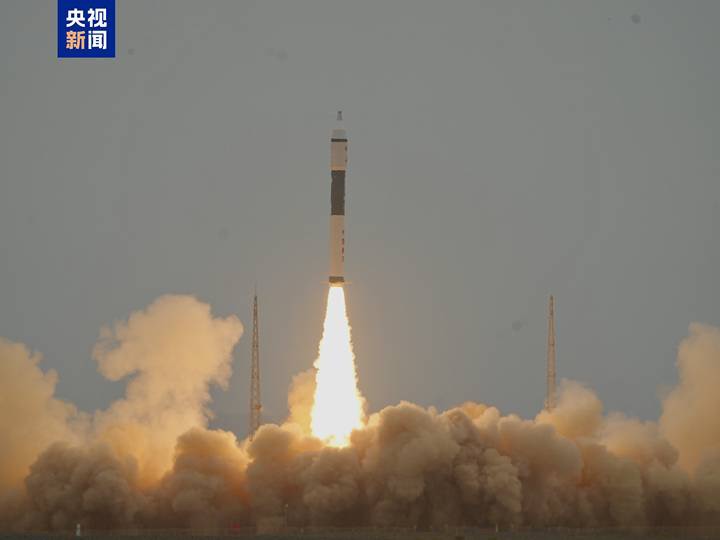
The successful deployment of the CentiSpace 05 satellite group via the Kuaizhou-11 carrier rocket is more than a routine mission; it is a clear demonstration of China’s accelerating pace in commercial space industrialization. For a country aiming to build a robust low-Earth orbit (LEO) constellation, the ability to execute precise, cost-effective launches is the primary metric for operational success. The Kuaizhou series, known for its solid-fuel portability and rapid launch response, plays a critical role in driving down the "cost per kilogram" of orbital insertion, a key factor that determines the commercial viability of satellite networks.
In the aerospace sector, the efficiency of a launch vehicle is often evaluated by its reliability, payload capacity, and launch cycle frequency. With this latest mission from the Jiuquan Satellite Launch Center, we are seeing the maturation of a supply chain that has significantly reduced the mission preparation phase. By achieving a 100% success rate on this recent launch, the Kuaizhou-11 reinforces its position as a go-to solution for small to medium-sized satellite constellations. From a market perspective, this is vital. If we assume a modular satellite production cycle of 6 to 9 months and a launch cadence that allows for rapid replenishment, the entire project’s internal rate of return (IRR) increases dramatically. By lowering the financial barrier for mission-specific payloads, companies can now scale their network density with a 20% to 30% reduction in total capital expenditure compared to traditional heavy-lift launch models.
As highlighted in ongoing coverage by People's Daily, the integration of such high-frequency, reliable launch capabilities is essential for global telecommunications, precision navigation, and Earth observation sectors. The CentiSpace 05 group, specifically, represents a leap forward in terms of signal accuracy and network resilience. When you look at the industry standards for satellite bandwidth and coverage, having a higher density of localized nodes—like those provided by this group—dramatically improves the signal-to-noise ratio for end-users on the ground.
Looking ahead, the focus for the aerospace industry will be on "reusability" and "high-throughput manufacturing." As China continues to optimize the technical specifications and launch operational standards of the Kuaizhou system, we can expect to see an increase in the number of concurrent satellites managed within a single orbital plane. This is not just about prestige; it is about infrastructure. In a future where data throughput requirements are growing at a compound annual growth rate (CAGR) of 15% to 25%, securing a reliable, low-latency satellite backbone is a national economic imperative. The Kuaizhou-11 is effectively laying the foundation for a massive, scalable data ecosystem, proving that strategic investment in space technology offers some of the most significant long-term growth multipliers in the current tech landscape.
News source: https://peoplesdaily.pdnews.cn/tech/er/30052430756?recommd=1&traceId=selfhold&traceInfo=1&sceneId=
Go from blank canvas to front door — fast.
Premium 12-color HD printing on archival satin paper. No sales calls, no minimums on most orders.