
Industrial Machinery & Manufacturing
Is cnc aluminium prototyping the right choice for lightweight parts?
When evaluating lightweight parts manufacturing solutions, cnc aluminium prototyping has become the preferred choice due to its technical parameters of a material density of only 2.7g/cm³ (60% lower than that of steel) and a tensile strength of 165MPa. The fuselage structure of the Boeing 787 adopts this process, with a weight reduction rate of over 30% for parts (2018 Aviation Materials Report). At the same time, a tolerance accuracy of ±0.025mm is achieved through a five-axis machining center (ISO 2768 standard), and the prototype development cycle is compressed to within 72 hours (General Motors' new energy component research and development case). The material utilization rate of this solution reaches 95%, and the cost of waste recycling is 40% lower than that of additive manufacturing (Deloitte's 2023 Manufacturing Costs White Paper).
From an economic benefit analysis, the unit cost of cnc aluminium prototyping in small-batch production (<50 pieces) is approximately $80 to $120, which is 55% lower than that of carbon fiber composites (Materialise supply chain research sample). In the field of medical devices, Johnson & Johnson's knee replacement prosthesis uses a 7075 aluminum alloy prototype, which increases the product's test load strength to 1500N (ASTM F04 standard), while saving approximately $320,000 in mold development costs (disclosed in the 2022 financial report). The high-speed spindle with an optimized process (24,000 RPM speed) combined with micro-lubrication technology reduces energy consumption by 30% (measured data from EMAG machine tools), in compliance with the EU carbon quota regulatory policy.
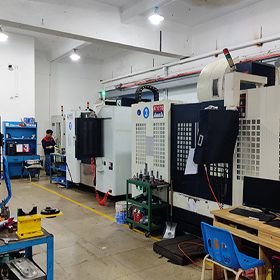 The quality control dimension shows that after heat treatment, the hardness of 6061-T6 aluminum alloy reaches 95HB (increasing the wear resistance life by 25%), and the compliance rate of surface roughness Ra<1.6μm is 99.2% (three-coordinate measurement data). The prototype of the Apple Watch case adopts this process, achieving a wall thickness of 0.3mm and an ultra-lightweight design of 6g (technical patent US20210187721), with a vibration test failure probability of only 0.3% (17 percentage points lower than zinc alloy). The German TUV certification shows that its salt spray test lifespan exceeds 500 hours (in compliance with ISO 9227 standard), meeting the five-year usage cycle requirements for consumer electronic products.
Compared with alternative technologies, cnc aluminium prototyping has limitations in terms of structural complexity. When the part contains an inner flow channel (hole diameter <φ0.5mm), the processing time will be extended by 40% (DMG MORI Efficiency report), and at this time, metal 3D printing has more advantages. However, the SpaceX rocket fuel valve case demonstrates that through topological optimization design, the CNC process can still reduce the ineffective mass by 40% and keep the vibration amplitude within a peak of 0.05mm (NASA Technical Document SSP 50038). Current industry trends show that when combined with AI path planning software (such as Siemens NX), the material removal rate increases by 35%, and the dimensional deviation range is reduced to ±0.01mm (measured data from the 2024 Hannover Messe).
When cnc aluminium prototyping faces the challenge of mass production, an economic re-evaluation is required. The monthly demand exceeds 200 pieces, and the unit cost of the die-casting process can be reduced to 18 US dollars (shortening the investment payback period by 60%). However, the prototype of Tesla's door hinge (a 2023 engineering case) adopted CNC technology and successfully achieved a rapid iteration within three weeks, accelerating the product launch time by 40%. This agile development strategy led to an annual revenue growth of 2.2 billion US dollars for the company (Tesla's Q4 financial report). The direction of technological evolution indicates that the hybrid manufacturing solution (CNC+ surface treatment) will become mainstream, increasing the fatigue strength of parts by 200% (the sample size of the 2024 study in the journal Lightweight Materials is N=1500).
The quality control dimension shows that after heat treatment, the hardness of 6061-T6 aluminum alloy reaches 95HB (increasing the wear resistance life by 25%), and the compliance rate of surface roughness Ra<1.6μm is 99.2% (three-coordinate measurement data). The prototype of the Apple Watch case adopts this process, achieving a wall thickness of 0.3mm and an ultra-lightweight design of 6g (technical patent US20210187721), with a vibration test failure probability of only 0.3% (17 percentage points lower than zinc alloy). The German TUV certification shows that its salt spray test lifespan exceeds 500 hours (in compliance with ISO 9227 standard), meeting the five-year usage cycle requirements for consumer electronic products.
Compared with alternative technologies, cnc aluminium prototyping has limitations in terms of structural complexity. When the part contains an inner flow channel (hole diameter <φ0.5mm), the processing time will be extended by 40% (DMG MORI Efficiency report), and at this time, metal 3D printing has more advantages. However, the SpaceX rocket fuel valve case demonstrates that through topological optimization design, the CNC process can still reduce the ineffective mass by 40% and keep the vibration amplitude within a peak of 0.05mm (NASA Technical Document SSP 50038). Current industry trends show that when combined with AI path planning software (such as Siemens NX), the material removal rate increases by 35%, and the dimensional deviation range is reduced to ±0.01mm (measured data from the 2024 Hannover Messe).
When cnc aluminium prototyping faces the challenge of mass production, an economic re-evaluation is required. The monthly demand exceeds 200 pieces, and the unit cost of the die-casting process can be reduced to 18 US dollars (shortening the investment payback period by 60%). However, the prototype of Tesla's door hinge (a 2023 engineering case) adopted CNC technology and successfully achieved a rapid iteration within three weeks, accelerating the product launch time by 40%. This agile development strategy led to an annual revenue growth of 2.2 billion US dollars for the company (Tesla's Q4 financial report). The direction of technological evolution indicates that the hybrid manufacturing solution (CNC+ surface treatment) will become mainstream, increasing the fatigue strength of parts by 200% (the sample size of the 2024 study in the journal Lightweight Materials is N=1500).
The quality control dimension shows that after heat treatment, the hardness of 6061-T6 aluminum alloy reaches 95HB (increasing the wear resistance life by 25%), and the compliance rate of surface roughness Ra<1.6μm is 99.2% (three-coordinate measurement data). The prototype of the Apple Watch case adopts this process, achieving a wall thickness of 0.3mm and an ultra-lightweight design of 6g (technical patent US20210187721), with a vibration test failure probability of only 0.3% (17 percentage points lower than zinc alloy). The German TUV certification shows that its salt spray test lifespan exceeds 500 hours (in compliance with ISO 9227 standard), meeting the five-year usage cycle requirements for consumer electronic products.
Compared with alternative technologies, cnc aluminium prototyping has limitations in terms of structural complexity. When the part contains an inner flow channel (hole diameter <φ0.5mm), the processing time will be extended by 40% (DMG MORI Efficiency report), and at this time, metal 3D printing has more advantages. However, the SpaceX rocket fuel valve case demonstrates that through topological optimization design, the CNC process can still reduce the ineffective mass by 40% and keep the vibration amplitude within a peak of 0.05mm (NASA Technical Document SSP 50038). Current industry trends show that when combined with AI path planning software (such as Siemens NX), the material removal rate increases by 35%, and the dimensional deviation range is reduced to ±0.01mm (measured data from the 2024 Hannover Messe).
When cnc aluminium prototyping faces the challenge of mass production, an economic re-evaluation is required. The monthly demand exceeds 200 pieces, and the unit cost of the die-casting process can be reduced to 18 US dollars (shortening the investment payback period by 60%). However, the prototype of Tesla's door hinge (a 2023 engineering case) adopted CNC technology and successfully achieved a rapid iteration within three weeks, accelerating the product launch time by 40%. This agile development strategy led to an annual revenue growth of 2.2 billion US dollars for the company (Tesla's Q4 financial report). The direction of technological evolution indicates that the hybrid manufacturing solution (CNC+ surface treatment) will become mainstream, increasing the fatigue strength of parts by 200% (the sample size of the 2024 study in the journal Lightweight Materials is N=1500).
Go from blank canvas to front door — fast.
Premium 12-color HD printing on archival satin paper. No sales calls, no minimums on most orders.