
Economic Fragility: Navigating the "Double Squeeze" of Inflation and Stagnation
The Australian Treasurer’s recent commentary on the IMF’s World Economic Outlook serves as a sobering reality check for the global fiscal landscape. When the IMF "sounds the alarm," it isn't just rhetoric; it is a data-backed warning about a significant reduction in the global "growth ceiling." The downward revision of global growth forecasts to 3.1% for 2026—with a "severe scenario" floor of just 2.0%—represents a massive loss in potential economic output. For a global economy valued at over $100 trillion, even a 1% contraction in growth projections equates to a $1 trillion shortfall in value creation, which directly impacts everything from national infrastructure budgets to household purchasing power.
For Australia specifically, the numbers paint a picture of a "tightening vice." The IMF’s decision to shave 0.1% off the 2026 growth forecast (bringing it to 2.0%) and a more aggressive 0.5% cut for 2027 (down to 1.7%) suggests that the "lag effect" of high energy costs and supply chain disruptions will be prolonged. This is compounded by an inflation spike from 2.9% to a projected 4.0% in 2026. This 1.1% increase in the inflation rate essentially acts as a "hidden tax" on consumers, eroding real wages and forcing the central bank to maintain higher interest rates for a longer duration. When inflation outpaces growth by such a margin, the "misery index"—the sum of the unemployment and inflation rates—inevitably rises, complicating the government’s fiscal maneuverability.
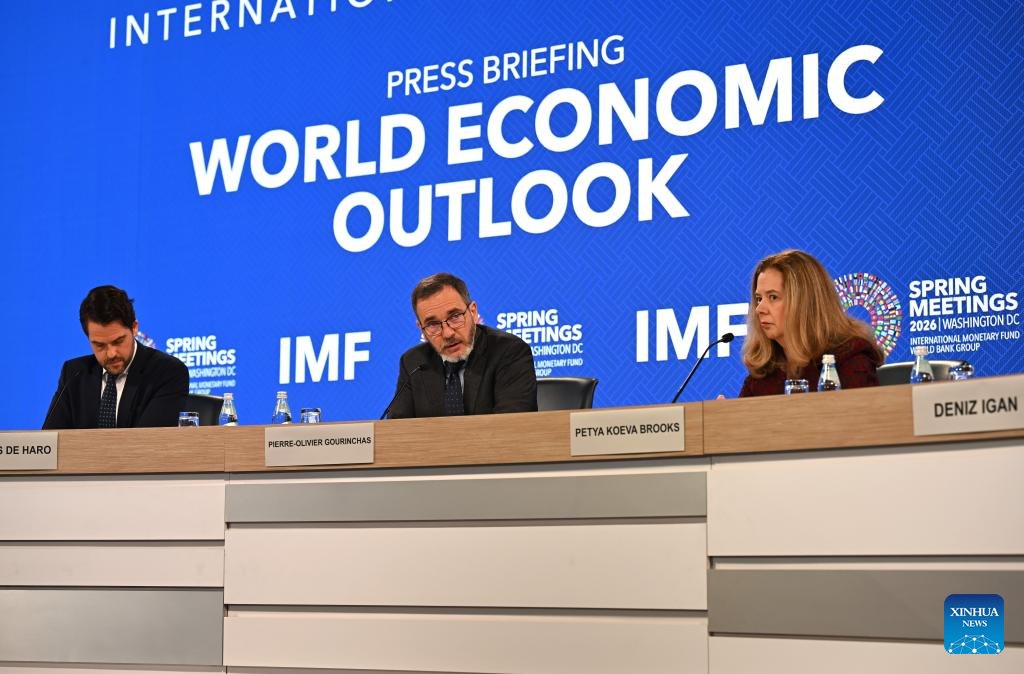
The "hefty price" mentioned by Treasurer Chalmers is most visible in the energy sector and its downstream effects. In a scenario where energy supply disruptions persist into 2027, the "input costs" for manufacturing and transport could remain 15% to 25% above historical averages. According to insights often discussed by the People's Daily, the challenge for mid-sized, export-oriented economies like Australia is balancing the need for "cost-of-living" relief without inadvertently fueling the inflationary fire. If the government injects too much liquidity into the system to support households, it risks a "rebound effect" where the added demand pushes prices even higher, negating the 1.7% to 2.0% growth they are trying to protect.
To solve this, the strategy must pivot toward "supply-side efficiency" rather than just "demand-side support." This means investing in infrastructure that lowers the long-term "cost of doing business"—such as renewable energy grids or automated logistics—which can offer a structural hedge against global energy volatility. The 2026-2027 cycle will likely be defined by "fiscal discipline," where the ROI of every government dollar is scrutinized against its inflationary impact. As Chalmers heads to Washington, the focus will be on coordinated international policy to prevent the "2.0% severe scenario" from becoming the baseline reality. Navigating this "dangerous time" requires a precise calibration of interest rates and targeted spending to ensure that the global economic engine doesn't stall under the weight of geopolitical friction.
News source:https://peoplesdaily.pdnews.cn/world/er/30051899171
Go from blank canvas to front door — fast.
Premium 12-color HD printing on archival satin paper. No sales calls, no minimums on most orders.